Your First Yoga Class: What to Ask and Expect
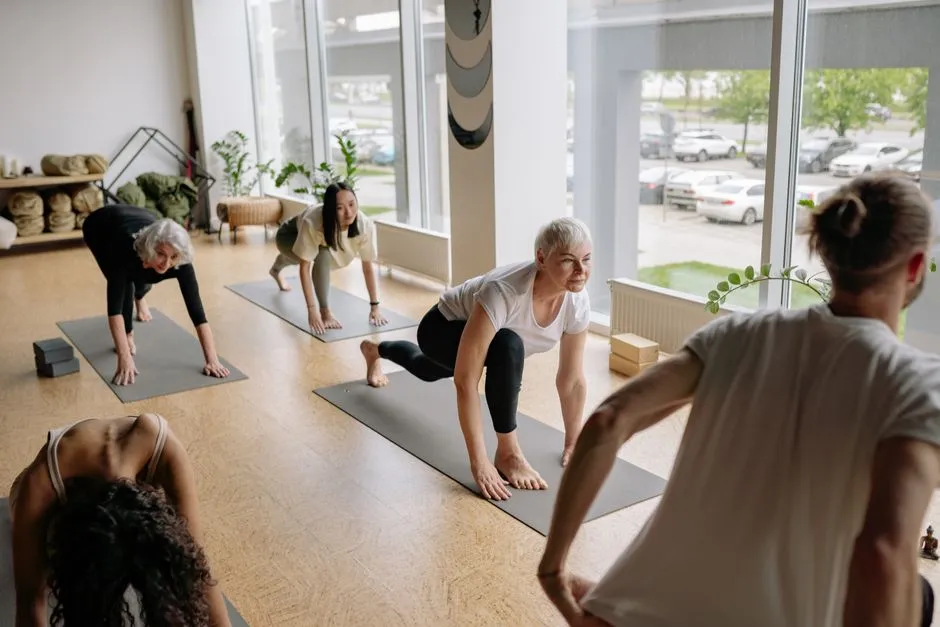
- Choose the class before choosing the outfit
- Ask what “beginner” means here
- Check the teacher and studio scope
- Ask about heat before booking
- Explain relevant needs privately
- Clarify hands-on assistance and consent
- Pack only what the class requests
- Choose a useful place in the room
- During class, keep agency
- Resting is part of the class
- Expect unfamiliar language without needing fluency
- After class, ask one precise question
- Decide whether to return
Choose the class before choosing the outfit
A first yoga class can feel like entering a conversation halfway through. People place mats in familiar rows, props appear from cupboards with no labels, and someone says “take a vinyasa” as though you have both previously discussed the matter.
The solution is not to study every pose in advance. Ask what the class actually does, arrive early, tell the teacher what they need to know, and retain the right to pause or decline. A beginner-friendly room makes those actions ordinary.
Yoga is physical activity and can cause injury. NCCIH recommends learning under a qualified instructor, particularly for beginners, and advises people who are pregnant, older, injured, or managing health conditions to discuss individual needs with a health professional and instructor.
Ask what “beginner” means here
Class names are not standardized. “Gentle” may describe pace, room temperature, pose choice, teacher tone, or none of the above. Before registering, ask:
- What style is taught?
- Is the class designed for someone with no yoga experience?
- How much time is spent standing, kneeling, seated, or lying down?
- Are fast transitions, weight-bearing on hands, balance poses, inversions, or heated conditions included?
- What props are used?
- How large is the class?
- Can the teacher offer options without providing medical treatment?
- Is the room and facility accessible for your needs?
A useful answer describes the actual hour. “All levels” is an invitation, not a technical specification.
Check the teacher and studio scope
Ask about the instructor's training and experience with beginners. Yoga credentials vary and do not make someone a physician, physical therapist, midwife, or mental-health professional. A teacher may hold one of those qualifications separately, but the role and scope should be clear.
Look for a studio that explains pricing, cancellation, equipment, accessibility, etiquette, emergency process, and conduct. Read recent official information rather than relying on an old directory listing.
If you need prenatal, post-injury, disability-informed, trauma-informed, or condition-specific support, ask what relevant training the teacher has and what the class can realistically provide. Then discuss medical suitability with the appropriate qualified professional. Marketing words do not replace that conversation.
Ask about heat before booking
Heated and hot yoga introduce additional dehydration and overheating risk. If you are new, a normal-temperature class is the simpler place to learn basic setup and notice your response.
NCCIH says hot yoga has special overheating and dehydration risks and advises pregnant people to avoid it. People with health conditions or medications affecting heat tolerance should seek individual medical advice rather than using a studio waiver as clearance.
Ask for the expected room temperature and humidity, not merely whether the class is called “warm.” Know the exit and keep water accessible according to studio rules. Leave if you feel dizzy, faint, nauseated, confused, unusually weak, or otherwise unwell.
Explain relevant needs privately
Arrive 15 to 20 minutes early. Tell the teacher that this is your first class and share relevant functional information: difficulty getting to the floor, a clinician-advised restriction, balance concerns, pregnancy, recent injury, or a movement you need to avoid.
You do not owe the room a public medical history. Ask for a private moment and state what you can and cannot do. The teacher can describe general class options but should not diagnose a symptom or clear you medically.
If the teacher dismisses a professional restriction, promises to cure the issue, or pressures you to disclose more than needed, leave. The mat is portable for a reason.
Clarify hands-on assistance and consent
Ask whether the teacher uses physical assists and how consent is obtained. You may decline all touch. Consent should be specific, informed, and revocable; a token placed at the top of the mat or a yes at reception does not prevent you from changing your mind.
Use clear words: “No hands-on assists, please.” If the teacher approaches anyway, repeat the boundary and move away. A qualified teacher should be able to instruct verbally or let you continue without adjustment.
Hands-on contact is not inherently superior instruction. It also cannot tell a teacher everything about internal sensation, injury, or medical history.
Pack only what the class requests
Confirm whether the studio supplies mats, blocks, straps, blankets, bolsters, and towels. Bring comfortable movement clothing, water if allowed, and any personal item the studio has approved.
Avoid strong fragrance and dangling jewelry. Silence the phone but keep necessary medical devices active. Follow footwear and hygiene rules. If borrowing equipment, inspect it and clean it according to studio policy.
Our guide to yoga props for beginners explains what blocks, straps, blankets, and chairs can do. You do not need to purchase a coordinated prop family before the first class has introduced you.
Choose a useful place in the room
Ask the teacher where beginners can see and hear clearly. Near the middle may provide visual references; near a wall may help with approved balance support; near an exit may feel better for someone who needs easy access. Avoid blocking doors, equipment, or walkways.
Place the mat with enough space that arms will not hit another person. Arrange water and props where they do not create a trip hazard. Learn the locations of toilets and exits before class begins.
Do not assume the most experienced-looking student is performing a version appropriate for you. They have a different history, body, and Tuesday.
During class, keep agency
Listen to the instruction, then choose the range and option you can control. A pose name describes a family of shapes, not a single finish line. Use a prop, keep a knee down, shorten the stance, or remain in a resting position.
You may skip a pose, especially an inversion, deep joint position, fast transition, or forceful breathing practice that feels unsuitable. NCCIH advises beginners to avoid extreme practices such as headstands, shoulder stands, lotus position, and forceful breathing.
Breath should remain possible and unforced. Stop for sharp, pinching, electric, or escalating pain, numbness, new weakness, dizziness, breathing difficulty, or feeling unwell. Tell the teacher and seek appropriate medical help for severe or persistent symptoms.
Resting is part of the class
Ask at the beginning what neutral resting positions are available. A seated position, hands-and-knees pause, or comfortable lying position may work depending on the person and class. Pregnancy and some health conditions can change which rest positions are appropriate, so use professionally advised options.
Do not remain in a pose because the group has not moved. The teacher is managing a room, not reading every internal signal. Leaving a shape early is information, not insubordination.
If you need to leave the room, move carefully, tell the teacher if practical, and take essential belongings without disrupting others. Do not drive if dizzy or unsafe.
Expect unfamiliar language without needing fluency
Teachers may use English pose descriptions, Sanskrit names, anatomy cues, imagery, or philosophical language. A beginner does not need to memorize it. Watch the teacher only when doing so does not strain the neck or destabilize the pose, and ask after class about a term that affected safety or understanding.
Avoid copying speed from the room. Wait for the instruction that makes sense, or stay where you are. Good teaching allows a beat for comprehension; good beginner practice is comfortable using it.
After class, ask one precise question
Instead of “Was I doing it right?”, ask about one repeatable issue: where to place blocks in a lunge, how to adapt wrist-bearing, or which class moves more slowly. Describe what you felt without asking the teacher to diagnose it.
Notice your response later that day and the next. Mild unfamiliar effort may occur, but pain or concerning symptoms deserve appropriate evaluation. Do not use soreness as the score for whether the class worked.
If the class felt too fast, hot, crowded, spiritual, athletic, quiet, or hands-on, that does not mean yoga failed or you failed yoga. It means you gathered useful selection data.
Decide whether to return
Consider:
- Did the description match the class?
- Were options explained without shame?
- Did the teacher respect consent and scope?
- Could you hear and move safely?
- Were the room and transitions accessible enough?
- Were pricing and policies clear?
- Did you feel free to stop?
Try another qualified teacher or style if the fit was poor. For home practice, our 10-minute morning sequence offers a modest structure, though written guidance cannot replace observed beginner instruction. For outdoor practice, beach yoga in Santa Barbara adds public-space and weather considerations.
The best first class is not the one where you perform the most shapes. It is the one where you understand the choices, keep your boundaries, and leave with enough curiosity to consider a second visit.
This article provides general educational practice information, not medical diagnosis, treatment, rehabilitation, prenatal care, or individualized instruction. Yoga can cause injury. Stop for concerning symptoms, and seek appropriate qualified guidance for pregnancy, injury, health conditions, balance concerns, or changes to activity.